Showing posts with label writing. Show all posts

Monday, June 2, 2014

Those Books Are For Kids!

After going through an old box of CDs, I pulled out a few and gave them a listen. Revisiting music I loved when I was between the ages of 10 and 15 brought back a lot of memories. I also came to the realization that, as a kid, I did not have the worldly experience that I would need to be able understand most of the lyrics. Clearly, I understand English and so I know what words mean, but I didn't understand the feelings behind them. I didn't have comparative experiences to what the singers were singing about and with adult ears, these lyrics and this music took on new meaning for me. Revisiting this music gave me a kind of "Ah-ha!" moment.

(Back in the day when I was listening to music it would take me years to truly understand.)
(I'm the one with the aversion to sunlight.)

At work I had to go through some lists of summer reading suggestions from area schools. Reading the titles of many of these books reminded me of ones I had read as a child or ones I never had the chance to read. Just like the music that had new meaning when revisiting it as an adult, I think the same can be said for children's literature. I'm not talking about the Adventures of Captain Underpants series, I mean classics like Tuck Everlasting, and The Diary of Anne Frank. Books that I read as a kid but had no context in which to put them in; books that left my memory almost as soon as I finished reading them because I didn't have personal experiences which allowed me to connect with the events in the stories on a more emotional level; books that were easily wasted on my youthful self.


As a student of literature, I've spent the last several years honing my ability to dig through a book and see the deeper meanings within a text. As a child I never had this ability - another way these books were wasted on me. But now I can fix that. I can go back and read those books again, take an afternoon and see what they were really about, compare them to my life now, make a connection to the deeper intentions of the story, find what makes these books classics and what makes them the kind of literature that schools want kids to read even if kids can't truly comprehend them or even remember them past childhood.

So that's what I'm going to try to do this summer. I'm cultivating a list and I'm planning on sitting down and really giving these books the focus they deserve and that my childhood self couldn't provide. And who knows, maybe by the end of this summer I'll have learned a few new things about writing that I wouldn't have learned otherwise. :)

Sunday, April 20, 2014

The Lasting Legacy of Gabriel García Márquez


I've been thinking about Columbian writer Gabriel García Márquez quite a bit since hearing about his passing on April 17th.


My first exposure to Márquez's work was when I read his short story "A Very Old Man with Enormous Wings." It's a beautiful story about religion, greed, and humanity (or lack thereof). The story establishes a wonderful social commentary while also utilizing one key element: magical realism. Márquez often utilized magical realism which meant his stories contained magical elements but these components were treated as normal parts of the world we live in. He is not alone in this genre (Rudolfo Anaya is another great author who utilizes this), but his work is eye opening for those willing to take the time to experience it. As a writer of fantasy, exploring magical realism is an interesting and educational way to look at utilizing fantastical elements within a story.  


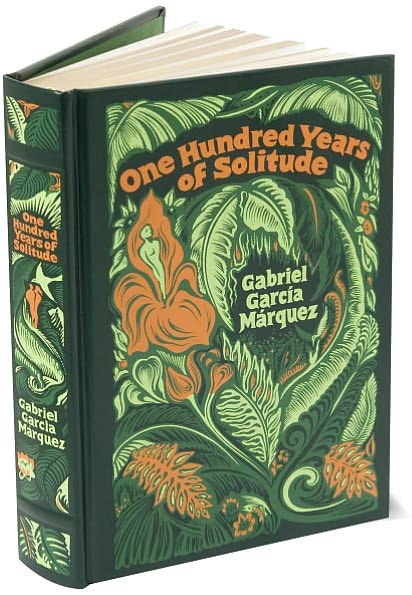
With his passing, Márquez leaves behind many famous novels such as "Love in the Time of Cholera," and "One Hundred Years of Solitude." Unfortunately, as time fills up with other things, we don't always sit down and spend the time enjoying great literature. It's sad that only when someone has passed on that we consider reading their work. Well, maybe it's more bittersweet than sad; his passing is a reminder that his legacy remains, that his books are still here to show us interesting ways to explore magic in our lives and our own stories. 

If you've got 15 minutes that you can dedicate to reading something by this wonderful author, perhaps a way to commemorate the man, check out his short story "A Very Old Man with Enormous Wings" at the link below:

Tuesday, April 15, 2014

My Experience With Memoirs And Creative Non-fiction


During my undergrad degree I had to take a range of English courses. One class I took was titled “creative non-fiction.” The professor of this course ran us through a series of exercises, gave us examples to read, and gave us assignments for writing. I continually failed miserably at the assignments. I just couldn’t wrap my head around what she was asking for. I got my lowest grade in an English course in that class because it just didn’t click.

Years later, while pursuing my Master’s degree, I had to take another creative non-fiction class. This time things started to make a bit more sense, and I wrote at least one piece that I can say I’m proud of. So what happened between one class and the other? Was it a different teacher, a different approach, personal growth? Looking back, I think it had a lot to do with where I was at as a writer and as a person.

Growing up I was shy, I was reserved, and I didn’t really want to tell people about my life and the troubles I had endured. When I was 20, sitting in that first creative non-fiction class, I was still shy and reserved and was not ready to share my personal story with the world. I was still writing childish things, and my creative non-fiction felt extremely childish. It also felt fake because I wasn’t truly opening up. I wasn’t imbuing my thoughts and feelings into the work. I was hiding behind poorly written prose and silly attempts to make my creative non-fiction funny instead of honest.

By the time I was pursuing my second degree, I was more open and more honest. I wrote a short piece about my relationship with my father and it actually touched some people. I gave it the emotion it deserved and didn’t hide the truth behind humor.

Recently, I’ve been writing more and more non-fiction from my own life. It feels like this is the right time to finally open up. The beauty of non-fiction is that it can be relatable to readers, and it can touch them through a variety of emotions.


I think creative non-fiction is a wonderful genre that every writer should explore. Just remember though, that if you’re going to start telling your own story you have to be ready to be honest, and to be open. If you’re not ready to tell your own story with all the truth and emotion it requires, give it a few years until it feels right.

Wednesday, March 12, 2014

Being Healthy as a Writer

Many writers know how important it is to sit down and get those words on the page (or computer). That is the single most important thing you can do as a writer (probably). But how to stay healthy while pursuing a pretty sedentary profession, that's not so easy to figure out. I've been struggling with this myself over the past few years, and I thought I'd share what I've come to know.


Get up from the computer!
Your body needs circulation, your muscles need to move. Make a point to get up and walk around at least once an hour. Obviously if you are in the midst of an amazing scene and don't want to interrupt your "flow" you might delay standing and walking, but don't go days of little to no movement while doing a several hour stretch of writing.

Reach for healthier snacks.
I grew up with a computer in the house, and with lots of boredom snacking. It's hard not to sit at the computer and not reach for a snack, and typically an unhealthy one. If you associate the computer with snacking, consider 1) are you really hungry? and 2) can you grab something healthy to eat instead of cheetos and mt. dew? Don't let your love of writing help you to unconsciously feed into mindless eating.


Opt for healthier coffee shop drinks.
If you happen to work weekly (or even daily) in a coffee shop and you order the largest sugary-est most caloric drink they have on the menu, you are doing yourself no favors. Try something with skim milk, no added sugars, or even order a water with your drink so that you can cut your sugary drink intake in half.

Hit the streets.
Consider taking a weekly or daily stroll. This will help get you active, and offset some of the time you spend sitting at the computer. It will also help fuel creative thoughts as our brains are often wired to produce new ideas or mull over old ones when our bodies are doing something else (i.e. sitting in the car, showering, trying to sleep). Walk your own street, or find local parks that will offer you different surroundings to fuel creative thinking. Taking a walk and making it a weekly habit can also re-energize your body and your mind and help you be more focused and excited about your project when you return to the computer.


I've also heard good things about standing desks, and about treadmills that sit under a desk, but I've tried neither of those and so I cannot personally recommend them. Just as writing is a personal journey, your own health and well-being is also a personal journey and you have to try out different changes and see what works best for you.

We all have excuses as to why we let our health slide but just as you wouldn't let excuses keep you from writing, don't let them keep you from staying healthy. In the end, you want to have many years on this planet writing a million books for your adoring fans even if it means taking a walk around the house once an hour for every hour spent in front of the computer.

Thursday, February 13, 2014

Guest Post: Author Rob White On Faking It ‘Till You Make It.


I’m an introvert. If you’re a writer – or any kind of artist, really – I bet you dollars to donuts you’re an introvert too, or at least have some ingrained introvert tendencies. Can’t speak for everyone but growing up I found my mental and creative stimulation through fantasy rather than through social interaction. I was the kid swinging the wooden sword in the woods at invisible goblins. I was the kid drawing monsters in the back of class instead of passing notes to cute girls. I was also the kid who had more than one epic fantasy tale mapped out in my brain before the age of 18. As an adult who allowed himself to believe that he could be a “real writer” (I’m one of those guys who says that being a real writer is about intention rather than measurable results) I finally began to share those fantasies with the world. If another lonely kid can gain the same thrill from my stories as I gained from Tolkien or Stephen King or Final Fantasy then I’d say all these hours in front of a keyboard or notepad covered in chicken scratch have been worth it.

Buuuut - and it’s a big but and I cannot lie – being a writer who releases his/her work to the public means that an introvert suddenly has to develop skills usually associated with that mysterious and alien race known as extroverts. We have to smile and greet passersby in hopes that they’ll buy our book (and therefore buy us lunch). We have to say hey, hi and how are you to dozens of names and faces online and in bookstores in hopes that they’ll carry or review our book. And if we’re really bold and really lucky – or persistent – we’ll get to sit at a table in front of a microphone and tell prospective authors about our experiences and how to get ahead in the business.

If you can’t guess, that’s what I’ll be doing soon as a panelist at Timegate, a Doctor Who and Stargate convention held in Atlanta in May.

I am horrified at the idea of not only being on stage in front of who knows how many people, but being up there in a position of supposed authority about a subject many of my audience members may actually be more experienced than myself at. I could look like a phony. I could look like a fraud. I probably will look like an idiot.

Yet I’m going to do it anyway. Why? Because I’m learning in this tricky, sticky business of being an artist that the only way to get up there, over there, out there and beyond is to carry yourself as if you’re already there. One year at DragonCon I decided to cosplay as the successful writer I wanted to be. I felt damn good that day. Better than the day I wore a Space Cowboy outfit. Better than the day I dressed as the protagonist of ThePull  and got mistaken for Snake Eyes. Better than the time someone thought I was Neil Gaiman. In a way, I’ve been wearing that costume ever since.

So my plan for Timegate is this: load up on caffeine, climb up on that stage and sit down at that table and be my own wise-ass self. The self who makes jokes to empty rooms while he writes alone in his office. The self who yells at the screen when Carl walks backwards away from a zombie and then falls on his ass on The Walking Dead. The self who posts ridiculous non-sequiters on Facebook and then comments on his own post. You know, that guy.

I hope I’ll be entertaining. I hope I won’t appear like I’m talking out of my ass. I’ll either be funny or I’ll be the quiet guy on the panel who says one helpful thing and then lets the experts talk. Or – worst case scenario – I’ll be the guy who says something inaccurate about Season 7 Episode 4 of Doctor Who and gets lynched by a mob of angry Whovians. This is the risk we take in putting ourselves out there, be we introvert or extrovert; and let’s be honest, it’s the extroverts who more often end up with their feet planted firmly in their mouth.

So I’ll fake it and believe that I’ll make it until one day – just maybe – I won’t be faking anymore. With each risk I take, public reading I participate in, story I submit and festival I sell books at I find that I’m faking it just a little bit less. One day, perhaps that guy you see at DragonCon will not be a wanna-be-writer in the costume of a real one, but will in fact just be me.

Maybe it already is.


Rob White is a novelist, a comic book author and a professional dreamer. He makes his home in Athens, Georgia where he revels in the chaos and magic of living in a town full of artists. He is the author of the Pull Series  and a local writing hero as he inspires and assists members of the Athens Writers Association to follow their writing and publication dreams.

You can find Rob on twitter: @robwhitethepull 
on The Pull's Facebook page 
and on his website: followthepull.com

Both book one and book two of The Pull series are on amazon.com: 
The Pull - Book One 
and 
Home is Where the Monsters Are 

Sunday, February 2, 2014

Reading In Public - Eek!

So the Athens Writers Association had their second Writers Read event, and as a good member of the organization, and as a writer who wants to learn how to be comfortable in front of a crowd, I stood up and read some of my writing.


The fear of the stage, while prevalent across people of all backgrounds, professions, and experiences, is pretty common among writers. I guess this makes sense. A lot of writers write to avoid the spotlight, letting their characters be center stage while they work in dark rooms away from the public eye. But to be a "professional" writer, one has to step out of the writing dungeon and in front of crowds - at least occasionally.

So how does one do that? Find an opportunity and throw yourself to the wolves. Okay, so it's not really that bad, although your brain and body might make you feel like it's that bad or worse. Even though I had practiced the hell out of my story (okay, I hadn't memorized it or anything) once I got on that stage the nerves set in and I almost collapsed like a derailed train before I even got the first word out. But I held it together, stumbled a little, and read my piece to the very last painful line before allowing my jiggly legs lead me off the stage and straight to the bathroom were I could shake out my jitters in peace.

One thing that helped was having the writing in hand. To see the words on the page meant I could focus on the paper and not the crowd. Some people will argue that the paper gets in the way and that you should be ballsy enough to face the people who are listening, but I'm not that ballsy - at least not yet. So I hold the paper and even though my eyes are mainly just skimming the print, (since I know the piece almost by heart), it's still gives me a false sense of comfort and helps me make my way through the reading.

Another thing that helped was remembering that at the end of the day, I'm up their to entertain. If I stumble on words, if I stutter (as I can be prone to do when anxious), if I have to pause and regain control of my voice, my breathing, my place in the story - all of that is okay, because I do it all with a smile on my face. Perhaps it's an apologetic smile, but I know that what words do flow smoothly are interesting and the ones I fumble will appear more comical or lighthearted if I have a good response to them. If I were to read, stumble, start to swear, and kick my feet, or even apologize each and every time I feel like I've screwed up (and feel is a strong word here because our own perception of how something is going is very different than the listeners/viewers perception) then the reader will be put off, offended, or "over it" long before I'm finished. If I pause and smile and continue on, they will bear with me. Since I am kind to myself when I make mistakes, they will feel compelled to be kind as well. And, frankly, if they even noticed the mistakes I make, then they're going to be kind because they came to hear people read they didn't come to heckle people. If they want to complain they'll do it after the reading is over and hopefully out of my earshot. ;)

Long story short, I taped myself reading my piece (which I'm sharing here) since I was a bit discouraged with how shaky I got on stage. This way I can remember it as something I read well, instead of something I was reading while feeling like I was experiencing one of the levels of hell - you know the one where your legs are jelly, your hands won't stop shaking, your vocal cords won't stop wobbling, you're sure you're either too loud or too quiet, and the certainty that everyone thinks you're the dumbest moron who ever spoke takes over all logical thought.


Wednesday, January 15, 2014

Character Bodies and Believability

I've been thinking about character descriptions lately. While I often struggle with describing my characters fully, and I often want to make them unique (not just your cookie-cutter thin, white, protagonist), the characteristics a writer gives a character not only shed light on that character, but on the writer and their audience as well. There is a lot of power in how we present heroes and heroines; writers shape the beliefs of readers, and can break down previously held ideas about what makes a person attractive, and what qualities help them succeed. At times, the tried and true forms of body shape, hair color, eye color, skin color, etc., is needed (especially if you are poking fun at a cliche), but most writers should try to break the molds presented to us from previous generations. As readers, we must also challenge what a writer has given us if it no longer rings true. Specifically, the representation of women has been historically skewed into body shapes and levels of attractiveness that do not apply to the average reader (and at times not even to the rare human).


So, recently I started reading a new series that I've had my eye on for a while. The series has been around for a while, it has lots of fans, and I really like the author (although this is the first time reading a book written by this person). I wouldn't say I had terribly high expectations, but for an urban fantasy book with a female main character, I had a few expectations about how the woman should be represented.

The character describes herself like so: "My upper body is slender, petite if you will, muscular and not bad to look at. Unfortunately, my legs are about five inches too short to ever be America's ideal legs. I will never have skinny thighs, nor anything short of muscular calves." Okay, I can picture that. She's short, fit, even muscular. I accept this description, but the page before the character says this: "I could bench press a hundred pounds, not bad, not bad at all. But when you only weigh a hundred and six, it puts you at a disadvantage." WHAT?!?!?!? 106??? Unless she is 4 feet tall, how can she possibly be muscular AND 106. The human body, if closer to 5 feet, would have to lose muscle mass, and a person's legs would be VERY skinny at 106.

Now I'm no doctor, even though I play one on TV, but that's how I see it. If you tell me your character is 106 lbs and not 4 feet tall or shorter, I assume they are wheel chair bound and their muscles have atrophied. Okay, so that's a little extreme. But I don't know any women who weigh that little, and don't have "skinny" thighs, unless this character suffers from body dysmorphia. Why even mention the weight? Why do we even describe women by these terms? None of the men in the book have described themselves by their weight, so why boil women down to a number (unrealistic or NOT) on a scale?

I will say that the book has been entertaining so far, and the series has sold millions of copies, so obviously this description is just a glitch in an otherwise interesting book. It's just something that made me think about characters, descriptions, and believability. I can accept that vampires exist in your world, that your character is awesome enough to kill them, but that she is only 106 lbs? Nope. You lost me. Maybe to some writers and readers it doesn't matter, but just as I hope to embrace characters of all backgrounds/circumstances, I also hope to bring characters to life that are believable in all aspects.

Thursday, October 31, 2013

How To Kickstarter Pt. 3

Content is key. Yes the video is important, and the prizes are too, but what you put on your Kickstarter in both the original page content and in your updates is potentially the most important. Not everyone is going to watch your video, but they might skim the page. Not everything you put on the page is going to be read but people might look over your project updates. The content you put up has to showcase your project and the reasons why other people should get excited and get on board!

With our Kickstarter we began with something catchy:


Whit Clayborne accidentally dates a soul eater and unwittingly falls for a vampire - and it's only his first week demon hunting...


This single sentence tells you about the project and hopefully draws you in with interest. Saying something like "I wrote a book and you might like it." won't get you very many backers. Think of something eye catching, something different, what makes your project unique and interesting? 


Since we are promoting a novel, we used our content to explore a couple of different things.


We discussed the book in a section called “book summary.” While we didn’t describe the book in its entirety, we did try to list things that would interest potential backers.


We also talked about “us” (my co-author and I) because people want to connect with the individuals who made the product. The video can be used to do this as well, but we explored our background and our interest a little further in the written content.


We discussed the prizes and shared some graphics related to this topic. 


We also shared our stretch goals (if you make more than your initial goal amount what else will you be doing with backer’s funds?) and I tried to make these related to what we are doing but also interesting so people would be excited about reaching them.

Lastly, I shared where people could keep in touch with us and our future projects. Your connection with potential backers doesn’t end with Kickstarter. Let people connect with you across the Web and maybe they’ll buy future books/CDs/artwork – whatever you’re working on.


My first update was a video, my second was a link to the first chapter of the book, and my third were the cute bitstip comics I shared in a previous post on here. These were all employed to hopefully get new people interested in the project and to keep backers interested in what’s to come. 


Don’t use updates to tell people what you had for breakfast. These shouldn’t be a nuisance and should only be used to thank backers and to get backers excited. By making updates open to the public you can potentially hook new people but if you have content you only want your backers to see then make sure the update is not public. 


Ultimately, keep your content appealing both with the text you use and the variety of media available to you to promote your project.

Want to see our content in action? Check out our Kickstarter at:
 http://www.kickstarter.com/projects/2121709675/the-beginning-of-whit-a-laugh-out-loud-urban-fanta

Friday, October 25, 2013

By the Power of Bitstrips

I thought it would be nice to break up the monotony of the Kickstarter campaign and instead share something I've been working on to promote the book. If you're on Facebook or have a smart phone you may have seen the Bitstrip app. This is a program that allows you to create a character for yourself and your friends and to put them into one frame comics. I decided it would be cool to do a couple of these with Whit and his roommate/bestie Brooks from the Full of Whit series. Enjoy!


The deep bond and hilarious misadventures of Whit and Brooks continues in book one of our series "The Beginning of Whit" on Kickstarter now! http://www.kickstarter.com/projects/2121709675/the-beginning-of-whit-a-laugh-out-loud-urban-fanta

Friday, October 18, 2013

How To Kickstarter Pt. 2

Okay, so part one was all about the video. Which is important. But another important feature of your Kickstarter, is your prizes. You want something related to your project, something you produce, and something interesting that will entice people to lay down money on the project because of what they will receive.

It took us a while to determine what our final prizes would be. We started out with a wide range of ideas some that seemed too simple (not valuable enough) and some that felt too difficult for us to make in a timely fashion or even too cost prohibitive. You want to give out some awesome stuff but you also want to raise money for publishing your book, not just raise money to make rewards and walk away from the process with just five dollars in your pocket.

What we settled on were obviously copies of the book, but then also series themed gift ideas. I had noticed on other Kickstarter campaigns that people were labeling the different levels, perhaps in an attempt to make them sound more interesting (which works) and so we decided to do the same. We created your basic prizes and then higher level “tracks.”

We did a demon hunting track with Demon Hunting Society gear associated with the prize levels.


We also did a Big City tourist track with prizes centered around Big City businesses.


We also took a look at what we could achieve in a limited amount of time and what the final cost would be for supplies. Our final decisions were as such:


As you can see we tried to have complementary prizes at each level of the different tracks but this also allowed people a little bit of a customization to their rewards.


What about the ideas we had to scrap? Well, those might end up being useful for future giveaways either during the campaign or once the book is out in print. I’ll talk more about that in a future post. 

Wednesday, October 9, 2013

How to Kickstarter. Pt. 1

I have just launched my own Kickstarter for the first book in the Full of Whit series - "The Beginning of Whit"!!!!


Woohoo! 
*Applause* 
Boo-hiss!
What? No booing!

Anyways. I decided to share some of my experiences with you here since Kickstarter is a very viable option for indie authors to get support (both monetarily and otherwise) for their projects.

I also decided to drop this into a multi-part blog series because it's a lot of content and I don't want to overwhelm or bore any of you. So bear with me. ;)

My Kickstarter Timeline:

August - filmed the original video for Kickstarter
Early September - finish editing video, polishing up text, creating content for page.
Late September - typing all of the information into Kickstarter, tweaking video, adjusting content
Early October - jumping through amazon.com business account hoops, final touches on Kickstarter page, waiting for Kicktarter to approve the project
October 8th - Kickstarter launched!
November 7th - Kickstarter will end.

Okay, so if you pursue a Kickstarter for your project it might not take you months to get from idea to launch but it might take you that long or longer. Kickstarter is a lot of work and even though we are only in day two of the campaign, and I can't say if it's worth it, I can say what it was like putting it all together. 

The first bit (other than several conversations and some serious planning) was making the video. It took us about 3 hours to shoot all the footage we wanted, and we only utilized about 5 minutes of it. The other usable footage has helped in other ways, like a promo/introduction video I made for my co-author and I for our FB page and Youtube page. Compiling the video, (because we shot a lot of our stuff in small segments and we didn't have a set script so many takes had to be scrapped), took over 20 hours to complete. 

The point of the video is to introduce yourselves, your product (the book), why you need backer's support (printing, editing, cover art, etc.) and what they will get out of it (shiny new books! and other goodies.). It's also important to make your product sound interesting - why are you passionate about it, why do you think it's worth a backer's time and money.

The video should be as professional as you can make it which means cutting down on background noise, considering the location of the shoot and utilizing the best equipment you can afford. I actually saw a Kickstarter video that was filmed in a mall with people walking by, the noise of the mall and the noise of the music playing in the mall on top of the authors talking about their project. I'm not sure if their project was successful but their video was pretty awful. 

I tried to create the simplest background I could - just a solid color wall with no pictures or other distractions. I also tried to limit the amount of ambient noise, but that was difficult in a busy household. We also filmed inside to limit any of the unpredictable noises that you could get outside or in a public location. 

When I compiled the final video, I utilized photos (some of our own and some free ones from www.morguefile.com) to introduce different segments of the film and I utilized free music from the free music archive http://freemusicarchive.org/ (windows movie maker actually suggests this site as a viable option for movie music). I also utilized windows movie maker to make my film, and it was good enough, but I know it's not the best software out there.

Lastly, I showed the original film to several people and altered it with their feedback, then showed them an edited, and changed that as well. I think I finally went with the fifth or sixth version which was a suitable time (5 minutes or less - to keep the interest of the viewer) and held enough content to promote the project. 

Long story short, here's my Kickstarter video for you to enjoy:


Thursday, September 19, 2013

Five More Haiku

A couple of years ago (has it really been that long?) I was working on a story that was going to have some post-apocalyptic haiku featured in it. In case you weren't around back then I had a post with my own haiku here, and a post about how to haiku here. But the point of this post has to do with the fact that I've picked that story back up and come up with some new haiku. While I've written almost 30 haiku now, a lot of them are pretty awful. I went through and picked the five best of the most recent batch to share here. I know they need work, and I haven't mastered the use of punctuation within them yet, and my syllables might be off (because I can be awful about counting them. One minute a word sounds like it has two syllables, the next minute it sounds like it has three, or one, or four. My brain has problems). But all that being said I'm pretty happy with the end result. Enjoy!


Tall grasses wave like 
welcoming friends, hiding the
graves that sleep beneath.

Tiny blossoms grow
where warmth and love do meet; we
struggle in darkness.

The wind rattles dry
branches and sun bleached bones of
those long forgotten.


Hawks fly across the
sky with purpose; we too, move
with deadly intent.

Trees reach within the
dirt, exploring deep places
unsoiled by man.

Monday, June 10, 2013

3 Ways To Fail At Twitter

Recently I started back on Twitter since it seems that most successful self-published authors are on the site. I'm not sure how many sales I'll get from being on Twitter but it makes sense to build up a following before I drop my book in case it does bring in a few sales. Since I've been back (I had signed up originally back in good old 2008) I've noticed some things that seem to work and some that really do not. So if you're an author and want to use Twitter to market your books, here are 3 ways to fail at Twitter, or really 3 things not to do on Twitter.

1. Sell, Sell, Sell
Would you ever return to a store where once you walked in the room someone started yelling at you: "Buy this! Buy this! Buy this! Buy this! Buy this! Buy this!" Probably not, so why would you ever use Twitter that way? If every tweet you post is "Buy my book!" people are not going to buy your book. Even if 50% of your tweets are like that you are still going to turn off a lot of people. A good rule of thumb is 80/20, 80% non-selling, 20% selling or other promotion (such as follow my FB page, or look at my blog tweets).

2. The Forever Tweet
There's a reason it's limited to 140 characters. Do Not post multiple tweets on the same topic with no end in sight. It's okay to carry on a conversation with others but don't just fill your page with a long string of endless tweets on one subject.


This especially doesn't appeal to followers because tweets go in last post order, meaning the first thing posted is at the bottom, so they have to scroll for a long time to see your original thought and then scroll forward to read the entirety of your ridiculously long rant. Imagine if you had to watch a TV show in reverse, it would be annoying just like a never-ending tweet rant.

3. Not Interacting With Others
While the other two are about what you might be doing that turns followers away, this is what you might not be doing which isn't allowing you to attract followers. When you choose to follow someone  it will work to your advantage to re-tweet something they've said, star/favorite something they've said or tweet directly to them with some sort of question or comment (not a direct message, that's different and typically frowned upon). By interacting with others you're directing them to your page and they'll usually follow you back (if your tweets are interesting to them and not examples of 1 or 2 above). Now some people are too busy to follow everyone that follows them and nudges them with a RT or a star but you'll get more followers by interacting with others. Also jumping into a conversation or responding to others is a great way to get noticed and if you're polite (not attacking others online) then you can typically get some followers by joining conversations or even starting conversations. People want to be noticed and when you notice them they'll typically notice you in kind.

So those are the top three things that come to mind when thinking about my experiences so far with Twitter and what seems to work and what doesn't. Hopefully this helps you out as you explore or improve your author Twitter account. :)

Wednesday, May 15, 2013

Using Facebook to Publicize Your Books

Since I've been delving into the world of social media as of late I figured I'd share my most recent online endeavor. Recently, I created a Facebook page for my co-author and I. This page will allow us to market our 'Full of Whit' series and potentially other works we publish.

(The cover image and header on our FB page.  https://www.facebook.com/JenniferInnesAndrewGrace)

We don't have a lot of traffic yet but I'm not too worried about it since we are in the process of polishing the first book and should have it ready to sell a few months from now. Getting the page up and running was important so that when the book is ready we will already have people waiting. It's also given us the opportunity to get some awesome feedback from future readers on both cover design and potential editors. Ultimately, I think there are a lot of interesting things a Facebook page can do for any author who is willing to take the time to set one up and maintain it.

The best place to start is to look at pages made by other authors and see how they built their page and what updates they make. Since there is two of us I decided our page needed both of our photos, but our faces are too big to fit in the tiny box given for personal photos so I made our cover image a picture of us. We also didn't have any good pictures of the two of us together so I had to cut and paste two different pictures and add an artsy effect so that it appeared seamless. In the smaller photo I posted a potential book cover for our first book in the series. Why I decided to do a joint author page was because a page for a book only works for that book (not easy to cross promote) and a page for a series alienates readers who enjoy your other works (also hard to cross promote when you start publishing other books or series). So an author's page seemed like the best option. Here we are able to promote our series and our own works.

Just like on Twitter where it's important to engage with others, Facebook requires a level of engagement because it is a "social" media. It's hard to engage others through a Facebook page but once you do you are reaching more individuals than you probably are through a blog or other media outlet. Every time a person shares your FB page, all of their friends/family will be exposed to it unlike your blog which is harder to share with everyone your readers know.

A final comment, keep it professional. Writing is fun but marketing/promoting your work is a job and to be successful you need to be professional. Maybe that's not the rule for everyone, but it's the rule for most people. Keep your photos clean, keep your content kind, and keep active online. :)

Do you have an author/book/series Facebook page? How has it worked out for you? Let us know in the comments! :)


Wednesday, April 17, 2013

Rejection

Just got my first rejection from a serious publisher. Now just to be clear, this is not the first time my work has been rejected so maybe that's why it's not really fazing me. I know it's something all writers face and probably everything that can be said on the matter has been said but I figured I'd share my experience anyways. I sent a query letter to Ace last April. In November, I received a response requesting the full manuscript. A week ago I received the formal rejection. It's hard not to look at it like a year down the drain, but I'm still resilient. My co-author and I are going back to the drawing board and accessing which publisher we want to send it to next. It's hard not to get a little frustrated when you think about if it will take a year with each publisher and if it will take 10 publishers or more before someone wants it. I mean, if it takes 10 years to publish that would be insane. I'll still write because it's impossible for me not to but I might give up on trying to get published after 10 years of rejections.

Anyways, I've also been researching the social media practices of authors I admire and I went to the website of Moira J. Moore, author of the Lee and Taro series, and found something interesting (and related). While Ace had been publishing her series (or at least the first 5 out of 6 books), the decided not to publish the 6th/final book. I think it would almost be worst to be picked up by a publisher only to have them drop my series halfway through completion. Hearing about her situation gave me some perspective. I know that publishers are having a hard time staying profitable and while "marketing" was listed as a reason not to publish my book; perhaps Ace is having trouble making even already published series profitable and not willing to take risks with new concepts/books/authors. Well, unless they appear to be the next Harry Potter series.

Lastly, Moira is sharing her 6th book of her series on her website for free (or for donation if you have the money and are willing to part with it). http://moiraj.livejournal.com/ While I'm not a fan of reading the last book in a series, first, knowing it's online for free might prompt people to start reading the entire series. And maybe that's how it will end up being for me as well. Like I said, I'll always write, but I won't spend the rest of my life fighting publishers to finally publish my stuff. Sure, I'll try a couple more and see if someone wants what I've got, but maybe it'll come down to publishing it myself or giving it away for free. Stories were meant to be read, profit or not.

Sunday, February 24, 2013

Story Boarding

So while working on my current novel (which I'm co-writing with my friend Andrew (yes, that Andrew)), I've come to find that there's a bit of an order of events issue, or continuity issue. We plotted it out pretty thoroughly before we started writing but once you divide bits and work on them separately, things might pop up in the wrong order. So I sat down on Saturday and started plotting the order of events like this:


While I originally wanted to just read through the text and re-organize, my attempt to do that left me looking at all the edits I want to make and was ultimately too overwhelming. Making a list on Word or in a notebook was still not working for me (it was way too long and also overwhelming to look at). Finally I settled down with a folder and sticky notes and I wrote essential plot points down and put them in order. This way I can easily see what's what (instead of reading through a whole list) and I can easily re-organize when necessary. What I've got in the picture above isn't even the entire book, so I've got more to add but I feel like it won't be as overwhelming to look at as my other two options. Just figured I'd share it with other writers in case they get caught wanting to move scenes around but feel overwhelmed with long lists or reading through 20-30 pages of text.

Monday, August 20, 2012

Writing Advice (not from me)

Recently I read an old Laurell K. Hamilton interview in Writer’s Digest. 


 I’ve read a lot of suggestions from published authors for new or fledgling authors, which I often find to be redundant and not helpful. Contrary to my expectations, I really enjoyed what Laurell had to say:

“Writers write. Put your butt in the chair and write on a regular basis…I start off by writing why I can’t write. Type every reason you can’t write. Complain, bitch, whatever. Half a page to a page in, the muse says, ‘Well, if you’re going to be writing anyways, you can do better than this.’ Also, if you don’t protect your time no one will. I wrote my first book two pages a day, five days a week.”*

Now I may be interpreting this wrong, but it sounds to me like Laurell has just as much trouble (some days) sitting down and writing as I do. I’m always wondering why I have the desire to write (story ideas show up at my doorstep almost daily) but little drive to sit down and do the dirty work. I figured something was wrong with me, like I was born wired wrong or something. I mean, why would anyone think of so many stories but feel like they are pulling teeth when it comes time to put those stories onto paper? Luckily, hearing a published and famous author also struggles to sit down and write makes me feel a little better about my own constant feet-dragging.  

Sometimes when it’s hard to sit down and write I think maybe this isn’t what I should be doing, but Laurell’s comment reaffirms that even published authors struggle with motivation and I can take comfort in knowing that writing is still something I should be doing even if it’s hard for me to sit down and do it. While I’m still not going to be the person that can demand a set schedule for daily writing, at least not any time soon, I’ll make a better effort.

*Quote Source: Schneider, Maria. “Genre Bender.” Writer’s Digest Apr. 2008: 49. Print.

Tuesday, November 8, 2011

Dialogue Between Books

I read something really interesting lately that suggested that all books written, all books being written and all books that will be written in the future are in dialogue with one another.  I think this is very true. When I write my own novels I see how stories I've read before help craft my own stories. I see how I respond to characters I've read about either positively or negatively with my own characters. I see myself combat similar scenarios and find new outcomes. I mean, where would literature be now without the classics to learn from and to build off of? And where will books be in the future without the work people are coming up with today?

Consider the books you've read and see if there is a bit of a "call and response" there. And consider the stuff you're writing, what are you saying about what's come before and what are you saying to what will come in the future?

Saturday, August 6, 2011

Novel Paralysis

Everyone has heard about writer's block. Some people say it doesn't exist, others say that it ruined their writing career. Either way, you know what I'm talking about when I say writer's block. It's like you've run into a wall when writing and can't easily move past it to continue writing.

For a long time I thought I had period writer's block, but recently I realized that my condition is worse than that, I've definitely come down with Novel Paralysis, to which there may not be a cure :( But I'm not giving up, I'm going to fight it, and maybe by sharing my condition others will learn from it and perhaps be able to protect themselves from this airborne virus.

I used to force myself to get one project done at a time. If I had a bought of writer's block I would take a break and then force myself back into writing. This behavior wasn't helping my cause, as I was finding myself going months of the year with little to no writing. So then I thought, when I fizzle on one project why not work on the next until I feel compelled to return to the first one? Great idea, right? Wrong. Now I have five unfinished novels and little to compel me to finish them. So that's where my Novel Paralysis comes to play. My inability to finish a novel, to literally come to a completely immovable spot in my fiction, has now become a larger roadblock than simple writer's block used to be. But I haven't given up hope. Because I want to finish these novels, I'm going to keep working forward and find ways to compel myself to work on them.

One way to re-invest myself in my stories is to review old material. By reading from the beginning I can sometimes be excited about the characters again and continue their tales.

A second way, at least for me, is to revisit the soundtracks I made for each book. Yes, as I'm writing I find music that fits key scenes and I listen to it when I need to. By re-listening to these specific tracks I can sometimes get in the right frame of mind to see the story and to want to write it out.

A last way, that I've come up with, has to do with the characters more than anything else. By connecting with characters, I'm more invested in their outcome. I've been doing a lot of drawing lately and I realized that one way to jump back into a story is to sketch out characters. While my drawings are pretty awful, if a character can come closer to life with a visual representation then I'm more excited to write out their story. That being said, after sketching these pictures of my character Dorian from No Rest, I actually sat down and wrote four pages for this story which unfortunately I haven't wrote on for months.

(Dorian deals with a lot of guilt and I tried to show that here. I also show that she has a gun and we assume she knows how to use it. I know that her proportions are awkward. She should be short as malnutrition affects height, but I think this doesn't really look right. I also know the gun is horrible in its representation.)

(Here Dorian looks a little like a child. Okay, a lot like a child, but we can attribute that to my poor drawing skills. Proportions still seem off, but this is a good first attempt and later attempts will look better.)

Hopefully these tricks will help me finish this book because it wants to be finished! I know it is true because I can feel it in my bones...

Thursday, May 12, 2011

My Writing Tool Box

I know that Stephen King talks about grammar and spelling as being in a writer's tool box, and I'm not saying they aren't there, but I just wanted to discuss the basic/actual/physical tools that I use when writing.

Notebooks:
I like to write everything down first, on paper, before committing it to the computer. I do sit down and work on the computer as well, but I feel like it's easier to get out the story by writing instead of typing (I'm not sure why). After things are written down, they have to be typed up anyways, so it's kind of redundant, but it allows me to have an initial edit as I'm cleaning up with writing from the notebook as I'm typing it onto the computer.


Pens: 

While water will destroy ink on paper, ink won't fade like pencil. If you write a story in pencil prepare not to be able to read those pages 10 years later.

I also like to find the most frictionless pens I can, as I want to write fast. Cheap pens tend to write slower (you can feel the pen drag across the paper), although I have found nice pens at the dollar store before.

Gel pens are great. Felt pens are perfection, but the writing on the page can be thick and hard to read and felt pen ink is destroyed by water a lot easier than regular ink (in my experience) and these are very expensive.

These are also great for when you're supposed to be writing but you're doodling on the edges of your paper instead.


Music:

This is not a picture of my music, but I felt like it was applicable when discussing the wide range of music needed, at least for me, when writing.

I can write in complete silence, but I also like particular tunes to help set the mood for a scene (not in a gross way) or to help my imagination wander.


Netbook:
Last but not least, my netbook. I have a laptop but since the screen died, it has become essentially a desk top. To replace this computer, I had to find something a little more mobile, so I purchased a netbook.

Netbooks are not very good for many things the usual person wants to do with a computer such as viewing websites, downloading programs, doing anything that requires a screen that is larger than 5" by 8" (random guess); but it works for typing up documents.

My netbook (I actually own the same acer as pictured here), while aggravating at times, has become essential not just for my writing but also for my school work. It doesn't come with a disk drive, so you have to come into the 21st century and purchase a flash drive if you are going to use this with your writing and hope to transfer information to another computer. Or you can always email yourself documents, if you have Internet in your home (unlike me).

Not including my brain (which is pretty essential to writing), I think this is a complete list of the things I need and use in my own writing. Please feel free to share any tools that are unique to you and your writing in the comments area. :)