Wednesday, June 11, 2014

Pinterest

If you're not familiar with Pinterest, you need to get familiar! j/k I think Pinterest can be a great tool for writers who are visually inspired and who like to organize their work visually (at least on occasion). Pinterest allows you to share and store images along with text that you can come back to again and again even if those images have been removed from the internet. The site allows you to make several boards for different interests or, for writers, different projects. 

I currently have a board for several of my books. I like being able to explore what the characters, scenery, and specific objects in the book look like. I also like sharing quotes that relate to the content of the book when possible. For my "No Rest" board [http://www.pinterest.com/innesjen/no-rest/]I have several images for each character, I have a lot of images for the scenery in the book and I've shared lots of quotes that set the mood of the world these characters live in. 


I'm also able to use Pinterest to drop hints about the story with seemingly random images such as the one below from my "No Rest" board:


Pinterest also gives you the opportunity to save images for books you haven't written yet but are in the back of your mind and you want to remember key things about. Or to potentially even explore the story through images prior to setting a specific plot. I have a few boards for books that I intend to write and I use the boards to keep myself excited about the project.

Pinterest is also a great way to engage with readers. By sharing your Pinterest boards with readers you can help them get excited about your books, the world they are set in and the characters that you've created. Below I've attached an image from my board for my book "Two Heads Are Better Than One" that represents a key object from the story. [http://www.pinterest.com/innesjen/two-heads-are-better-than-one/]


There is an added feature of creating hidden boards. These boards can be used for images you want to be able to see but you don't want others to see on your site. These boards can help you get excited about a project before sharing it with everyone else. They also can be used to only allow a select few people to see the images you've saved there. 

Lastly, Pinterest also allows you to explore your brand online and to share things that associate with your online persona, or at least to share some of your other interests with the public at large. For me, that means lots of cat photos [http://www.pinterest.com/innesjen/gabby-and-chewie/]:


Monday, June 2, 2014

Those Books Are For Kids!

After going through an old box of CDs, I pulled out a few and gave them a listen. Revisiting music I loved when I was between the ages of 10 and 15 brought back a lot of memories. I also came to the realization that, as a kid, I did not have the worldly experience that I would need to be able understand most of the lyrics. Clearly, I understand English and so I know what words mean, but I didn't understand the feelings behind them. I didn't have comparative experiences to what the singers were singing about and with adult ears, these lyrics and this music took on new meaning for me. Revisiting this music gave me a kind of "Ah-ha!" moment.

(Back in the day when I was listening to music it would take me years to truly understand.)
(I'm the one with the aversion to sunlight.)

At work I had to go through some lists of summer reading suggestions from area schools. Reading the titles of many of these books reminded me of ones I had read as a child or ones I never had the chance to read. Just like the music that had new meaning when revisiting it as an adult, I think the same can be said for children's literature. I'm not talking about the Adventures of Captain Underpants series, I mean classics like Tuck Everlasting, and The Diary of Anne Frank. Books that I read as a kid but had no context in which to put them in; books that left my memory almost as soon as I finished reading them because I didn't have personal experiences which allowed me to connect with the events in the stories on a more emotional level; books that were easily wasted on my youthful self.


As a student of literature, I've spent the last several years honing my ability to dig through a book and see the deeper meanings within a text. As a child I never had this ability - another way these books were wasted on me. But now I can fix that. I can go back and read those books again, take an afternoon and see what they were really about, compare them to my life now, make a connection to the deeper intentions of the story, find what makes these books classics and what makes them the kind of literature that schools want kids to read even if kids can't truly comprehend them or even remember them past childhood.

So that's what I'm going to try to do this summer. I'm cultivating a list and I'm planning on sitting down and really giving these books the focus they deserve and that my childhood self couldn't provide. And who knows, maybe by the end of this summer I'll have learned a few new things about writing that I wouldn't have learned otherwise. :)

Thursday, May 29, 2014

X-Men: Days of Future Past


So on Monday I went and saw the new X-men film and I think it's probably my favorite film of the year so far (yes, I liked it better than Captain America BUT there are a few contenders that might give it a run for its money like Rover starring Guy Pearce). This is saying a lot because I don't tend to walk into a film excited about it and walk out satisfied with it. Typically my expectations ruin films, or rather when films don't meet my expectations I'm disappointed and don't enjoy the movie. But Days of Future Past did not disappoint (at least it didn't disappoint me). And I'm pretty geeked about seeing it a second time in theaters (which, if you know me, is a rare occurrence indeed). Why did I like it so much? Let me tell you...


WARNING: There be spoilers ahead!


After X-Men: The Last Stand, I walked out of the theater angry and I said the only way to fix this crap is to send Bishop back in time to change it. I repeated that to anyone that would listen and a few who wouldn't. Mind you, I'm not terribly familiar with the comics (only read a few) but I'm familiar with the 90s TV show, so I was aware of the story line where Bishop travels through time. So I just figured he'd have to do it. I didn't mind that it was Wolverine instead. I like Wolverine (he's maybe my favorite X-men character), and I didn't care that it followed a comic book story line that originally featured Shadowcat in the time traveler role. I'm just glad someone went back and fixed the crap that happened in Last Stand. Even if we want to get all science-y and discuss the fact that the world Logan wakes up in at the end of the film is probably an alternate universe where the events of Last Stand didn't occur but the universe where they did still exists, and the universe where the Sentinels are destroying all the mutants we love still exists, and Logan is just one lucky S.O.B., or is he because maybe the new universe/timeline he's found himself in is the one where Apocalypse exists, and if he had stayed in one of the other timelines/universes he would have avoided Apocalypse and the death and destruction he will bring altogether...Anyways, I'm still happy with the ending of this film and I can finally let my anger about Last Stand go. Good times.

It's also awesome that Bishop did make it into the film, even if he only had a small role.

Another reason I enjoyed the film because it gave you several scenes of intense drama but also scenes of humor that made characters more endearing. Like most people, I felt like one of the best scenes of the film is when Quicksilver goes around the kitchen and cleans up the mess, so-to-speak. That scene alone is worth seeing the film twice just so you can catch every aspect of what he's doing. It's so well thought out, but happens surprisingly fast. ;) Another humorous bit that made me laugh out loud is when Magneto gets angry and the plane starts to fall out of the sky and stuff is falling everywhere and everyone is worried that they're all going to die in this tin can. Then Magneto controls himself, the plane rights itself, and Wolverine looks at the dishes and crap that now are all over the floor and says to Magneto, "Are you going to pick that crap up?" Classic Wolverine - pretending he's not scared by being a wise guy.

One more reason I liked the film was because Wolverine wasn't really the main character. While I love me some Hugh Jackman, and was glad he was in this film, I was even more glad that he was kind of sidelined and let other characters shine. I can't explain it well, I guess, but the fact that he was present but wasn't the focus of the film made it better. He could be there with his side comments and his support but it was about other characters getting their crap together and their challenges which gave the film its emotional depth and meaningful conclusion. Wolverine was just along for the ride and that suited me fine.

A final reason I thought the film was so so so so good, was because of how layered it was (also why I think it deserves a second viewing). I've been so disheartened by superhero movies lately, the ones that are so basic you don't need to think while watching you just applaud explosions and whatnot. I really didn't know what to expect from this film and I didn't give it the preparation it deserved. Yes, this movie deserves some forethought before sitting down and watching it. You should watch X-Men First Class again, before viewing because so many elements from that film come to play. Little details you'd miss if you didn't have that film in the forefront of your memory when sitting down in the theater. Details that I wanted to know but had to rack my brain to remember since I had seen the film so long ago. So I definitely want to see First Class ASAP before I head back to the theater. I think the film is made that much better by being able to spot the slight nods to the previous film and by understanding maybe a little clearer the relationships between characters (or rather being reminded of their intensity).

So yes, I really, really, really liked this movie. In case you were wondering.

Sunday, April 20, 2014

The Lasting Legacy of Gabriel García Márquez


I've been thinking about Columbian writer Gabriel García Márquez quite a bit since hearing about his passing on April 17th.


My first exposure to Márquez's work was when I read his short story "A Very Old Man with Enormous Wings." It's a beautiful story about religion, greed, and humanity (or lack thereof). The story establishes a wonderful social commentary while also utilizing one key element: magical realism. Márquez often utilized magical realism which meant his stories contained magical elements but these components were treated as normal parts of the world we live in. He is not alone in this genre (Rudolfo Anaya is another great author who utilizes this), but his work is eye opening for those willing to take the time to experience it. As a writer of fantasy, exploring magical realism is an interesting and educational way to look at utilizing fantastical elements within a story.  


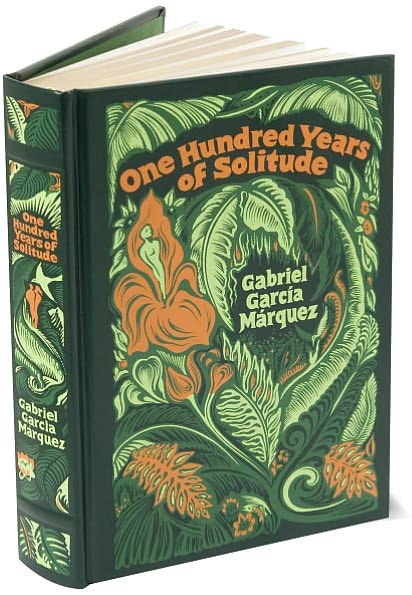
With his passing, Márquez leaves behind many famous novels such as "Love in the Time of Cholera," and "One Hundred Years of Solitude." Unfortunately, as time fills up with other things, we don't always sit down and spend the time enjoying great literature. It's sad that only when someone has passed on that we consider reading their work. Well, maybe it's more bittersweet than sad; his passing is a reminder that his legacy remains, that his books are still here to show us interesting ways to explore magic in our lives and our own stories. 

If you've got 15 minutes that you can dedicate to reading something by this wonderful author, perhaps a way to commemorate the man, check out his short story "A Very Old Man with Enormous Wings" at the link below:

Tuesday, April 15, 2014

My Experience With Memoirs And Creative Non-fiction


During my undergrad degree I had to take a range of English courses. One class I took was titled “creative non-fiction.” The professor of this course ran us through a series of exercises, gave us examples to read, and gave us assignments for writing. I continually failed miserably at the assignments. I just couldn’t wrap my head around what she was asking for. I got my lowest grade in an English course in that class because it just didn’t click.

Years later, while pursuing my Master’s degree, I had to take another creative non-fiction class. This time things started to make a bit more sense, and I wrote at least one piece that I can say I’m proud of. So what happened between one class and the other? Was it a different teacher, a different approach, personal growth? Looking back, I think it had a lot to do with where I was at as a writer and as a person.

Growing up I was shy, I was reserved, and I didn’t really want to tell people about my life and the troubles I had endured. When I was 20, sitting in that first creative non-fiction class, I was still shy and reserved and was not ready to share my personal story with the world. I was still writing childish things, and my creative non-fiction felt extremely childish. It also felt fake because I wasn’t truly opening up. I wasn’t imbuing my thoughts and feelings into the work. I was hiding behind poorly written prose and silly attempts to make my creative non-fiction funny instead of honest.

By the time I was pursuing my second degree, I was more open and more honest. I wrote a short piece about my relationship with my father and it actually touched some people. I gave it the emotion it deserved and didn’t hide the truth behind humor.

Recently, I’ve been writing more and more non-fiction from my own life. It feels like this is the right time to finally open up. The beauty of non-fiction is that it can be relatable to readers, and it can touch them through a variety of emotions.


I think creative non-fiction is a wonderful genre that every writer should explore. Just remember though, that if you’re going to start telling your own story you have to be ready to be honest, and to be open. If you’re not ready to tell your own story with all the truth and emotion it requires, give it a few years until it feels right.

Tuesday, April 1, 2014

The Year of Yes

I’m sure most of you are familiar with this sort of “experiment.” Taking a certain amount of time and dedicating it to being open, to turning away from automatic “no’s,” and saying “yes” as often as possible. It’s not a new concept but it’s still a good one if you, like me, shy away from opportunities out of fear.

Now I’m not knocking fear, it has its purposes, but it can also easily take over your life. As writers, we can become very exclusionary. We spend time alone, we don’t like to break our habits, and we will take small guaranteed successes over risking any success at the chance of an epic win. There’s also a lot of fear or rejection that runs deep in writers. That fear keeps us from sharing work, from putting our stuff out there, and from putting ourselves out there.


You, like me, might get to a point where you say “enough is enough you stupid fear monster, leave me alone!”(Or something to that effect.) And you want to change things about yourself, and your feelings, and your life. But where do you start? How do you get out of the fear cycle? You start by saying “yes.”

Don’t let those what-ifs trip you up. Think about the end game. You want to live a fuller life; you don’t want the fear monster eating your dreams. You want to seize the day and find greater success in all aspects of your life including your writing. While you still need a level of consideration when offered opportunities (don’t go jumping off bridges), you also need to say yes to as many things you say no to, if not more.


While this idea can be applied to all facets of our lives, when considering the writing experience think about the things you’ve said no to. Are there publications you’ve avoided submitting to? Is there a story you want to write but keeping yourself you can’t do it? Are there readings you’ve considered participating in but are afraid to get up on the stage? Don’t let the fear monster take these experiences away from you. While fear is always a formidable foe, finding success in the ways you want to is always worth fighting your demons. You are in charge of your destiny, of your success, of your writing. Look at the things you’ve been saying no to. Consider if that pesky no is holding you back and keeping you from attaining your dreams. Then go out, brave the world, and start saying yes.  

Wednesday, March 12, 2014

Being Healthy as a Writer

Many writers know how important it is to sit down and get those words on the page (or computer). That is the single most important thing you can do as a writer (probably). But how to stay healthy while pursuing a pretty sedentary profession, that's not so easy to figure out. I've been struggling with this myself over the past few years, and I thought I'd share what I've come to know.


Get up from the computer!
Your body needs circulation, your muscles need to move. Make a point to get up and walk around at least once an hour. Obviously if you are in the midst of an amazing scene and don't want to interrupt your "flow" you might delay standing and walking, but don't go days of little to no movement while doing a several hour stretch of writing.

Reach for healthier snacks.
I grew up with a computer in the house, and with lots of boredom snacking. It's hard not to sit at the computer and not reach for a snack, and typically an unhealthy one. If you associate the computer with snacking, consider 1) are you really hungry? and 2) can you grab something healthy to eat instead of cheetos and mt. dew? Don't let your love of writing help you to unconsciously feed into mindless eating.


Opt for healthier coffee shop drinks.
If you happen to work weekly (or even daily) in a coffee shop and you order the largest sugary-est most caloric drink they have on the menu, you are doing yourself no favors. Try something with skim milk, no added sugars, or even order a water with your drink so that you can cut your sugary drink intake in half.

Hit the streets.
Consider taking a weekly or daily stroll. This will help get you active, and offset some of the time you spend sitting at the computer. It will also help fuel creative thoughts as our brains are often wired to produce new ideas or mull over old ones when our bodies are doing something else (i.e. sitting in the car, showering, trying to sleep). Walk your own street, or find local parks that will offer you different surroundings to fuel creative thinking. Taking a walk and making it a weekly habit can also re-energize your body and your mind and help you be more focused and excited about your project when you return to the computer.


I've also heard good things about standing desks, and about treadmills that sit under a desk, but I've tried neither of those and so I cannot personally recommend them. Just as writing is a personal journey, your own health and well-being is also a personal journey and you have to try out different changes and see what works best for you.

We all have excuses as to why we let our health slide but just as you wouldn't let excuses keep you from writing, don't let them keep you from staying healthy. In the end, you want to have many years on this planet writing a million books for your adoring fans even if it means taking a walk around the house once an hour for every hour spent in front of the computer.